Before the Vote
How Australia's Casino Licences Were Won and Built
Every legal casino trading in Australia today traces its authority back to a single Tasmanian ballot, held on 14 December 1968, in which electors were asked whether the state should permit a licensed casino at all. The result was close rather than decisive, a marginal 53 per cent 'yes' vote, and it was the Reece Labor government that carried that mandate forward into legislation rather than leaving it to sit as an opinion on paper.
Wrest Point Hotel Casino opened at Sandy Bay in Hobart on 10 February 1973, becoming the first legal casino to trade anywhere in the country, in a state that held only a fraction of the population enjoyed by Sydney or Melbourne. Tasmania moved first not because it was the largest market but because it was the only one willing to put the question to its electors, and the building that resulted was later added to a heritage register, a listing whose merits this publication argues fully elsewhere rather than settling the matter here.
The 1968 vote was not on details of design or scale, since no casino building existed yet to argue about. Electors were asked only whether Tasmania's government should be allowed to license one, a narrower and more abstract question than any later state would face, because every state that followed did so by simply passing an act, without returning the question to its own voters.
As Built
A Tower Built to Be Seen From the Water
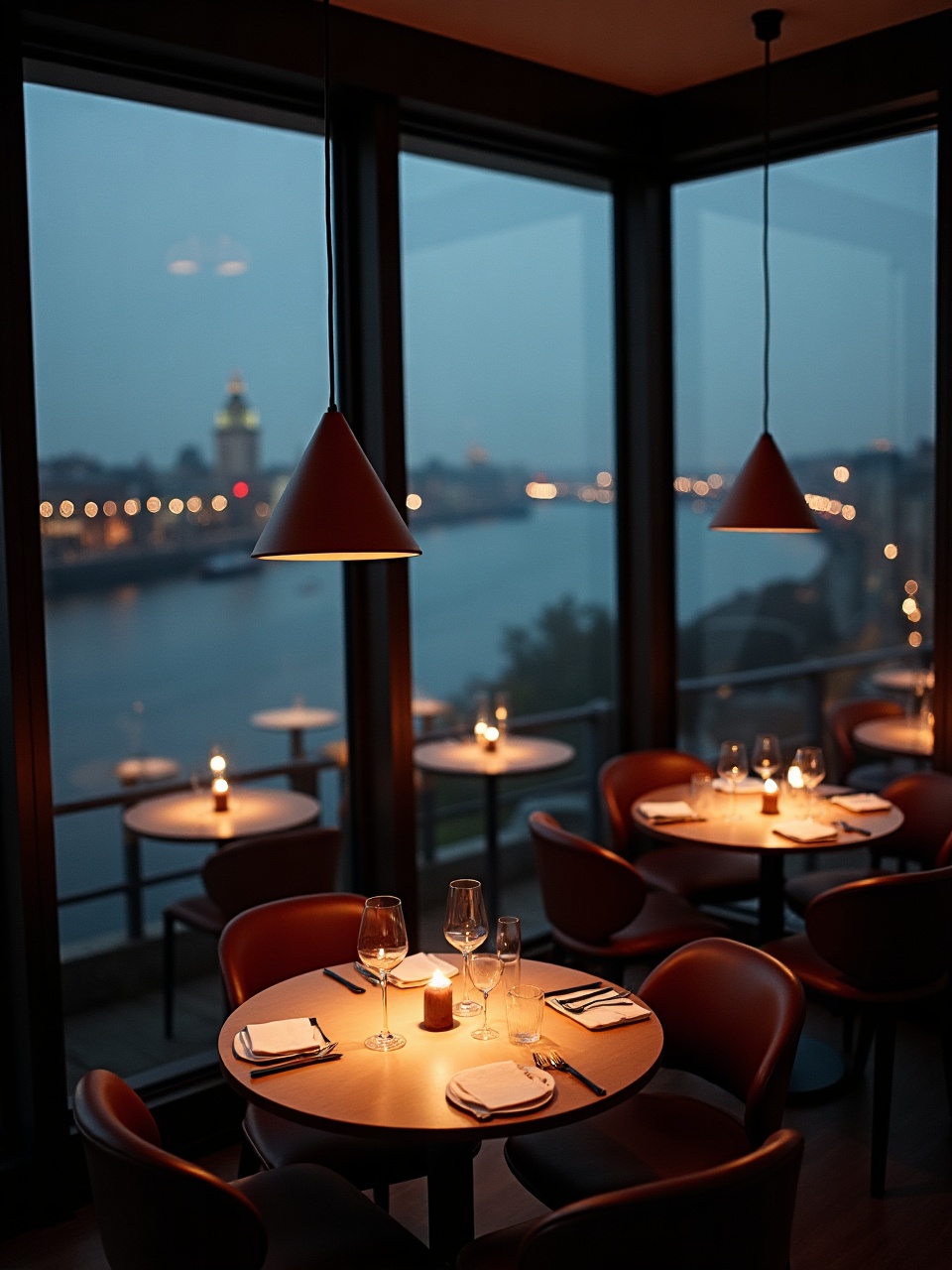
The tower that Wrest Point built carries a revolving restaurant near its summit, a device that casino and hotel architects of the period borrowed from observation towers rather than from any gaming precedent, turning a full circle over the course of a meal so that every table eventually faces the water. The floor plan below follows an octagonal geometry, which means that unlike a simple rectangular block, every upper room receives an angled view rather than one squared off against a single flat wall of glass. It was a modest way of using geometry to sell a landscape, and Wrest Point applied it a decade before Burswood, in Perth, tried to sell scale instead.
Sandy Bay sits on the Derwent estuary, so the water the tower was built to face is not open ocean but a broad tidal river, and the octagonal plan makes the most of a shoreline that curves rather than running straight.
State by State
The State-by-State Licence Timeline
Wrest Point held a decade-long head start as the only legal casino in the country, and other states waited rather than rushing an act of parliament to match it. When licences finally followed, they followed one jurisdiction at a time, each with its own act, its own tender and its own opening date, set out below in the order in which the doors opened.
Reading down the list is also a short history of how each operator solved the same problem of turning ordinary land into a gaming floor, whether by adapting a station, reclaiming a riverbank, or simply trading from a temporary building until a permanent one caught up.
- NOV 1985 TO FEB 1986
Jupiters, Gold Coast
A soft opening in November 1985 preceded the official opening in February 1986, making it Queensland's first legal casino.
- 12 DEC 1985
Adelaide Casino, North Terrace
Opened inside the 1928 Adelaide Railway Station, its main rooms adapted from a booking hall and marble concourse rather than purpose-built for gaming.
- MID-1980s
Burswood, Perth
Built on reclaimed land on an island in the Swan River, and for a time its floor area made it the largest casino in Australia, in an era when scale itself was the headline claim.
- 29 JUL 1994
Casino Canberra
Opened with table games and no gaming-machine floor at all, a combination unique among Australian casinos to this day.
- 1994 TO 1997
Crown Melbourne and The Star, Sydney
Crown traded from a temporary site from 1994 before its permanent Southbank complex; The Star followed the same pattern, temporary from 13 September 1995 and permanent from 27 November 1997.
Why the Openings Cluster in the Mid-1980s
There was never a Commonwealth framework for any of it, and so the authority to licence a casino rested with each state parliament, exercised through its own legislation and on a timetable answerable to nobody else. The bunching of openings in the middle years of the 1980s follows directly from that arrangement, arriving a decade behind Hobart because the intervening years were spent in observation rather than in drafting. Ministers elsewhere had the luxury of reading Tasmanian revenue figures, of noting which complaints were made and which were not, and of judging what a licensed room had done to the daily texture of a modest city. Tasmania alone had put the question to its voters, and once the precedent stood, later governments preferred the quieter instrument of an act of parliament, which every subsequent jurisdiction duly adopted.
Wrest Point had shown, by the time the last of these openings arrived, that the Tasmanian question of 1968 had effectively already been answered for the whole country, even in states that never put it to a vote of their own.